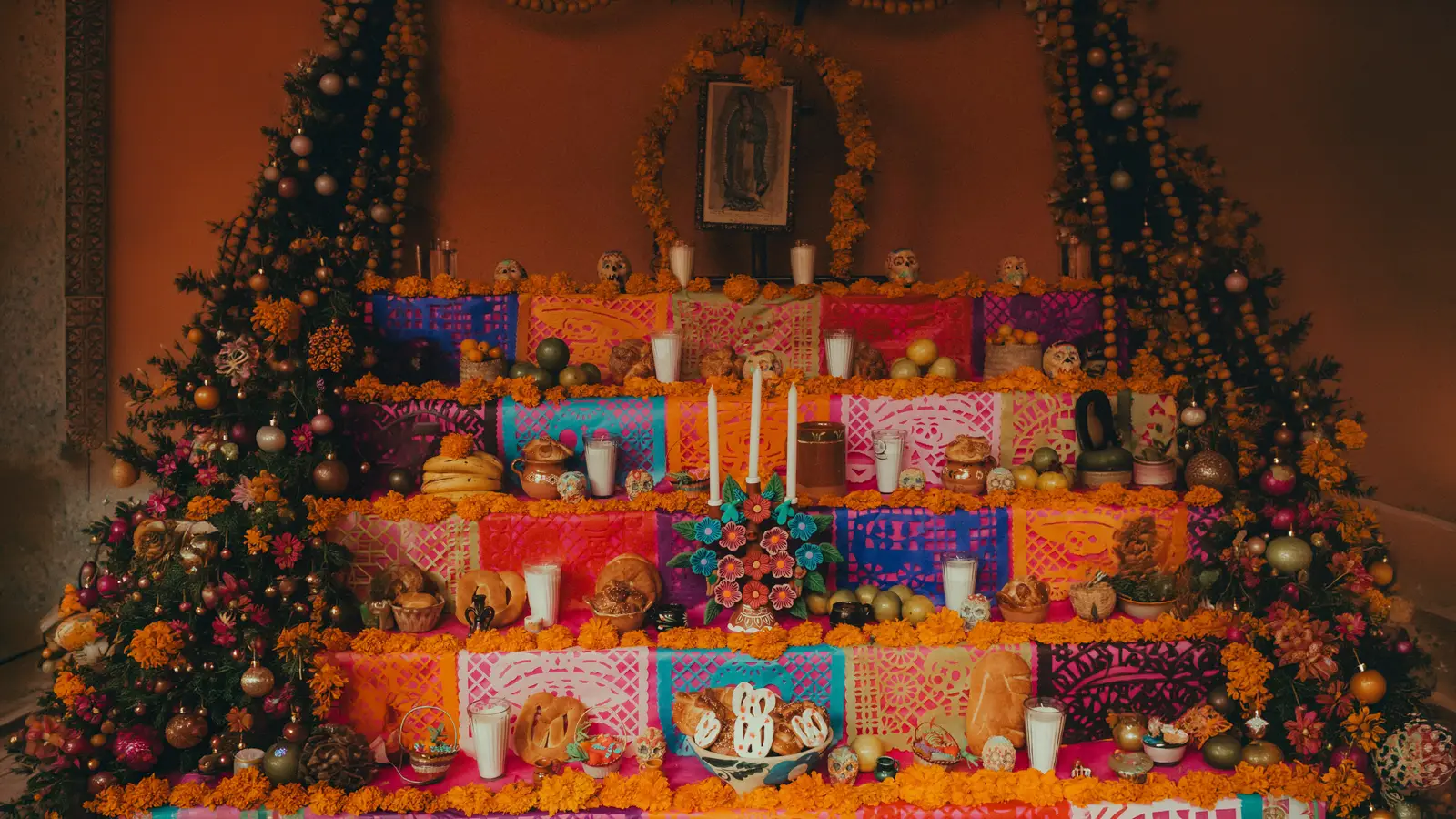
Every flower, every candle, and every cherished memory has a place on a Day of the Dead altar. Discover the meaning behind one of Mexico’s most beloved traditions.
In Mexico, there is a time of year when homes are filled with cempasúchil flowers, the scent of copal mingles with that of freshly baked bread, and photographs of those who are no longer with us once again take on a special significance.
It’s the Day of the Dead, a celebration in which remembering becomes a way of receiving.
At the heart of this tradition lies the Day of the Dead altar, also known as an ofrenda: a space set aside to honor our deceased loved ones and, according to tradition, to welcome them during their visit to the world of the living.
But what does each item mean? Why do we place flowers, candles, and food? And how can we prepare our own offering?
Discovering this is a way to connect with a Mexican tradition that brings together history, beliefs, and family memories.
What is a Day of the Dead altar, and what does it symbolize?
A Day of the Dead altar, known in Mexico as an ofrenda (offering), is a special space created to remember and honor loved ones who have died. Families decorate it with flowers, candles, photographs, food, and meaningful objects as a symbolic way of welcoming them home.
Its meaning is linked to memory, affection, and hospitality: a way of expressing that those who have passed away continue to be part of our history.
A tradition that brings together different beliefs
Today’s Day of the Dead traditions reflect centuries of cultural exchange and transformation. Indigenous ways of honoring the dead interacted with Catholic commemorations introduced during the colonial period, particularly All Saints’ Day on November 1 and All Souls’ Day on November 2. Over time, communities throughout Mexico developed their own ways of remembering and welcoming the departed.
What goes on a Day of the Dead altar?
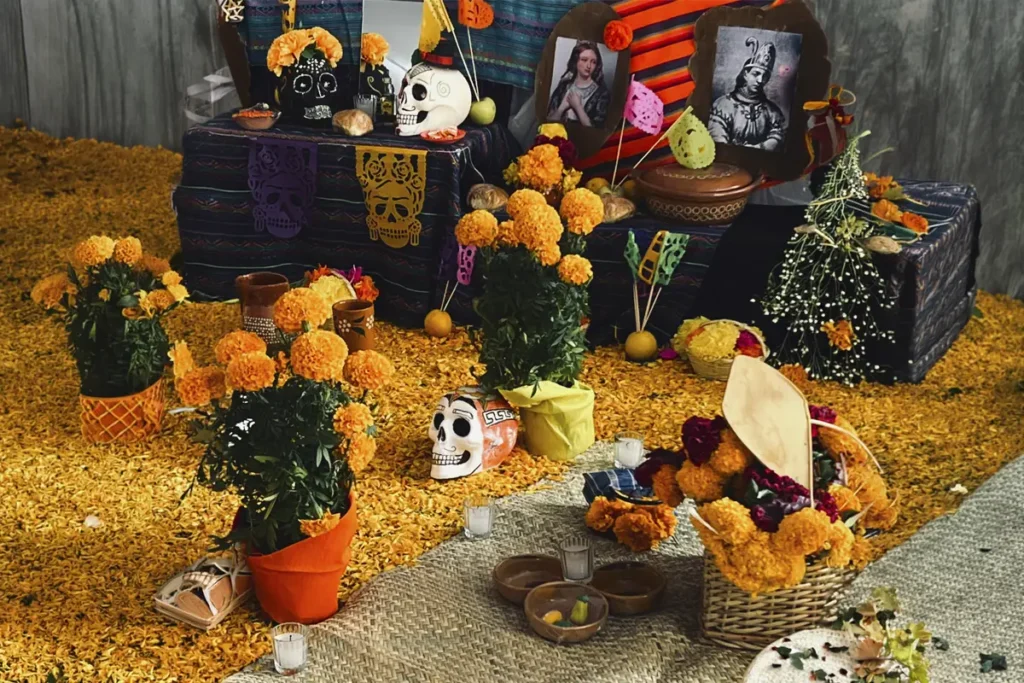
A Day of the Dead altar brings together objects filled with meaning. Flowers, candles, food, photographs, and other offerings each play a part in welcoming and remembering loved ones.
Not every altar includes the same elements. Traditions vary across regions and families, but many of these objects share meanings that have been passed down through generations.
Here are ten of the most recognizable elements of a Mexican Day of the Dead altar.
Cempasúchil (Mexican Marigold): The Path of Souls
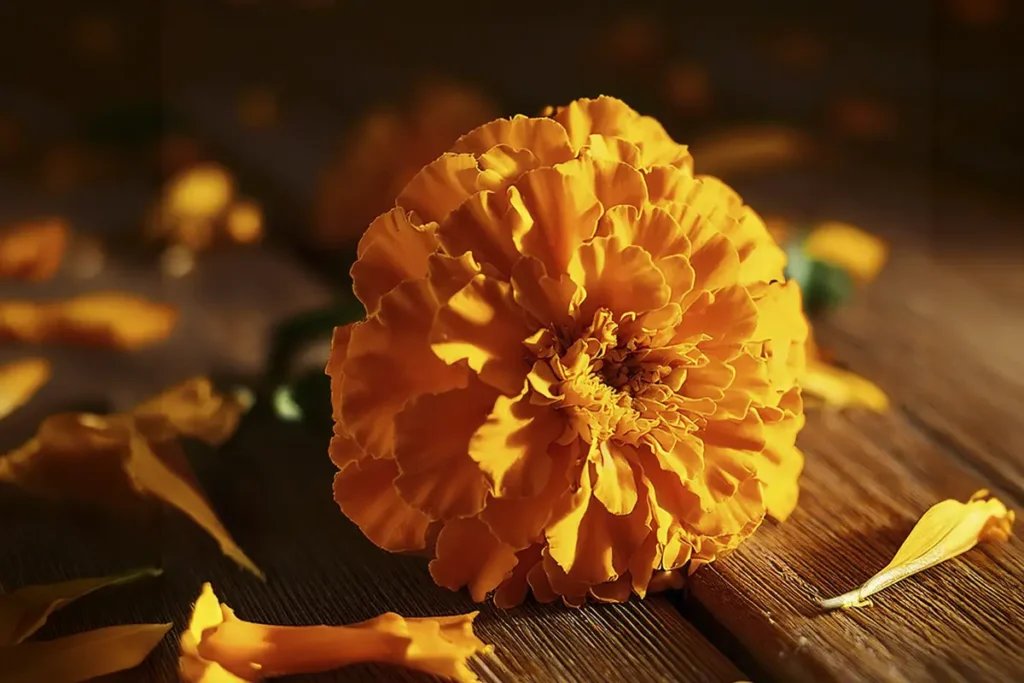
With its vibrant yellow and orange colors, the cempasúchil is one of the most recognizable symbols of the Day of the Dead.
Its name comes from the Nahuatl word cempōhualxōchitl, commonly interpreted as “flower with twenty petals” or “flower of many flowers.”
In various traditions, its color and scent are associated with guiding souls. For this reason, its petals are often arranged to form paths leading from the entrance of homes to altars.
Beyond its beauty, the cempasúchil embodies one of the central themes of the celebration: preparing the way to welcome those we remember.
Candles: A Light to Guide the Way
The light from the candles symbolizes faith, hope, and spiritual guidance.
In many offerings, they are lit to symbolically illuminate the path of the souls. Their significance is also linked to the religious traditions that are part of the celebration.
Some families place one candle for each person they are remembering; others arrange several around the altar.
Water: To Quench Thirst After the Journey
A glass or container of water is one of the most common items found in offerings.
According to various traditional interpretations, it is placed there to quench the thirst of souls after their journey from the world of the dead.
It can also symbolize life and purity.
It’s a simple gesture of hospitality: offering a drink to someone who comes to visit.
Salt: A Symbol of Purification
Salt is usually placed in small containers and is associated with purification and spiritual protection.
According to some interpretations, it symbolically helps preserve the soul’s integrity during its journey.
Although it appears in numerous offerings, its use and meaning may vary from one community to another.
Pan de Muerto: Bread Made for Sharing
Pan de muerto is one of the most iconic foods of this celebration.
One of its best-known forms is a round loaf decorated with strips of dough that are often interpreted as bones and a central sphere associated with the skull.
However, there are many regional variations, featuring human and animal forms as well as distinctive decorative motifs.
Placing it on the offering is also a way to express affection through food.
Copal and Incense: Traditional Aromas
Copal is an aromatic resin that has been used since pre-Hispanic times in various ritual ceremonies in Mesoamerica.
When burned, it gives off a fragrant smoke associated with ceremonial and purification practices.
Over time, its use coexisted with incense and other religious practices.
During the Day of the Dead, these scents accompany numerous offerings and are part of the ceremonial atmosphere.
Papel Picado: Color and Movement
Papel picado adds color and movement to Day of the Dead altars.
In some contemporary interpretations, it is associated with the wind, while its designs featuring skulls, flowers, and skeletons reflect an important Mexican craft tradition.
Its presence also shows how the decorative expressions of the Day of the Dead have evolved over time.
Photographs: Remembering Familiar Faces
The photographs make it possible to identify the people to whom the offering is dedicated.
Family altars may feature portraits of several generations, along with personal items and mementos.
Although they aren’t essential in every tradition, they help make the altar a deeply personal space.
Favorite Foods and Drinks: A Personal Welcome
In addition to pan de muerto, many families prepare the foods their loved ones used to enjoy.
Tamales, mole, fruit, chocolate, coffee, or a special dish can be included in the offering.
The choice depends on each person’s preferences and family traditions.
After all, preparing someone’s favorite meal is one of the simplest ways to show you care.
Decorative Skulls: Another Way to Represent Death
Sugar skulls, chocolate skulls, amaranth skulls, and skulls made from other materials are characteristic of the Day of the Dead.
They may have names written on their foreheads and appear at altars as well as in markets and popular celebrations.
Their presence reflects a way of portraying death through humor, creativity, and artistic expression.
Each element carries its own symbolism, but it is the beliefs, memories, and affection of each family that bring the ofrenda to life.
When Should You Set Up a Day of the Dead Altar?
Altars are usually set up during the last few days of October, although the dates vary depending on family and community traditions.
The main commemorations take place on November 1 and 2.
November 1: All Saints’ Day
All Saints’ Day is celebrated on the Catholic calendar.
In many Mexican communities, this date is associated in particular with the souls of deceased children, affectionately known as angelitos.
Their offerings may include toys, candy, fruit, and foods they enjoyed while they were alive.
November 2: All Souls’ Day
In many Mexican communities, November 2 is especially associated with remembering adults who have died.
In addition to preparing the offerings, some families visit cemeteries to clean and decorate the graves, bring flowers, and gather to remember their loved ones.
What about pets?
In recent years, it has become popular to set aside October 27 to remember deceased pets.
Some families set up small altars with photographs, toys, and favorite foods.
It is important to distinguish this contemporary practice from traditional calendars: October 27 is neither a universal date nor a widely documented ancestral celebration.
Traditions also evolve along with the families that keep them alive.
How many levels should a Day of the Dead altar have?
Altars may have one or more levels, depending on family traditions, regional customs, and available space.
Although altars with two, three, and seven levels are common, there is no required number.
Over time, different interpretations of what these levels represent have emerged:
- Two levels: these are usually associated with heaven and earth, or with the spiritual and earthly worlds.
- Three levels: some interpretations associate them with heaven, earth, and the underworld; others incorporate Christian religious symbolism.
- Seven levels: A popular interpretation links them to the stages the soul goes through to find rest.
These meanings may vary from one community to another and do not represent a universal rule of Mexican tradition.
Many families set up their offerings on a table or a simple surface, without using steps.
What matters most is understanding the traditions behind these altars and finding your own meaningful way to remember the people you love.
How to Make a Day of the Dead Altar at Home
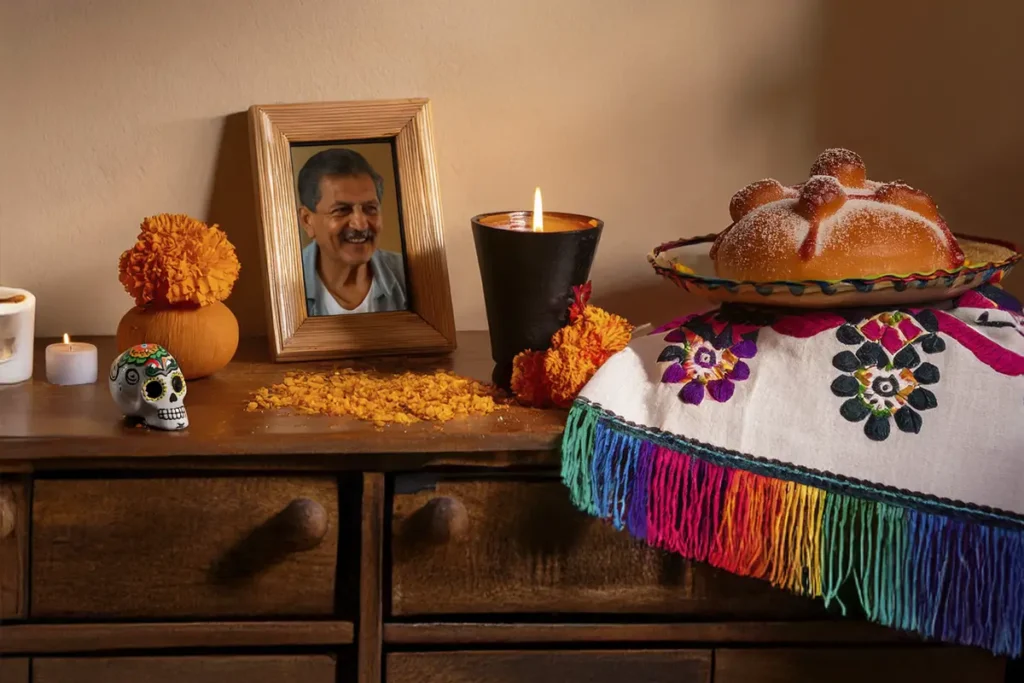
Preparing an offering at home is a way to take part in this tradition and set aside a special space for those we remember.
Although some communities maintain their own ceremonial traditions for setting up their altars, a family offering can be adapted to the customs, memories, and circumstances of each household.
You don’t need a lot of space or all the traditional elements. You can start with just a few items and create a space full of meaning.
These five steps will help you prepare your own offering.
- Choose a special place
Find a quiet, safe spot inside your home. It could be a table, a shelf, or a small corner.
If you want multiple levels, use sturdy boxes covered with fabric or tablecloths.
Clear the space and arrange the objects so that the photographs and main elements are prominently displayed.
- Display photographs and personal mementos
Choose portraits of your loved ones or include objects that evoke shared moments.
It could be a book, a letter, a handmade object, or a special keepsake.
If you don’t have any photos, you can also dedicate the offering to someone by using their name or a meaningful object.
- Add flowers, light, and traditional elements
Place cempasúchil flowers in vases or scatter a few petals around the altar.
You can add candles, water, salt, papel picado, or copal, depending on your traditions and what you have available.
For safety, keep candles away from paper, dried flowers, and other flammable materials. LED lights are a good alternative, especially when there are children or pets around.
- Prepare Your Loved Ones’ Favorite Foods and Drinks
Include pan de muerto, fruit, candy, coffee, or a dish that your loved ones enjoyed.
You may remember that your grandfather loved tamales or that someone in your family could never go without a cup of coffee in the morning.
Those little details are what make each offering unique.
If you store prepared food, avoid eating it after it has been left out without proper preservation.
- Give it your own meaning
You can include a letter, a special photograph, or an object that represents a family story.
You can also accompany the preparation of the altar with music and conversations about the people you wish to remember.
In many homes, preparing the offering is an opportunity for different generations to share memories.
A small offering can be just as meaningful as a multi-level installation.
After all, an altar is made not only of objects, but also of memories.
Are all Day of the Dead altars the same?
Although many offerings share common elements, their forms and meanings vary from community to community.
In some regions, they are prepared mainly at home; in others, cemeteries become important gathering places for families.
Michoacán: Flowers and Candles at the Graveside
In Purépecha communities in the Lake Pátzcuaro region, such as Tzintzuntzan and Janitzio, commemorations dedicated to the dead are part of an important community tradition.
Families prepare offerings, and in some cemeteries, they decorate the graves with flowers and candles.
Beyond the images of illuminated cemeteries, these practices reflect family ties and cultural continuity.
Oaxaca: The Diversity of Local Traditions
In Oaxaca, offerings may include traditional breads, fruits, chocolate, mole, and other foods prepared to welcome the deceased.
There are also community celebrations and visits to cemeteries.
Practices vary by region and town, reflecting the state’s cultural diversity.
Mexico City: Tradition and Contemporary Expressions
In communities such as San Andrés Mixquic, in Mexico City, Day of the Dead is marked by longstanding local traditions, including family offerings and visits to the cemetery.
At the same time, museums, plazas, and public spaces feature monumental altars that incorporate contemporary art installations.
These expressions show how the celebration continues to evolve without losing its connection to memory and cultural traditions.
The True Meaning of an Ofrenda: Remembering Is Also Celebrating
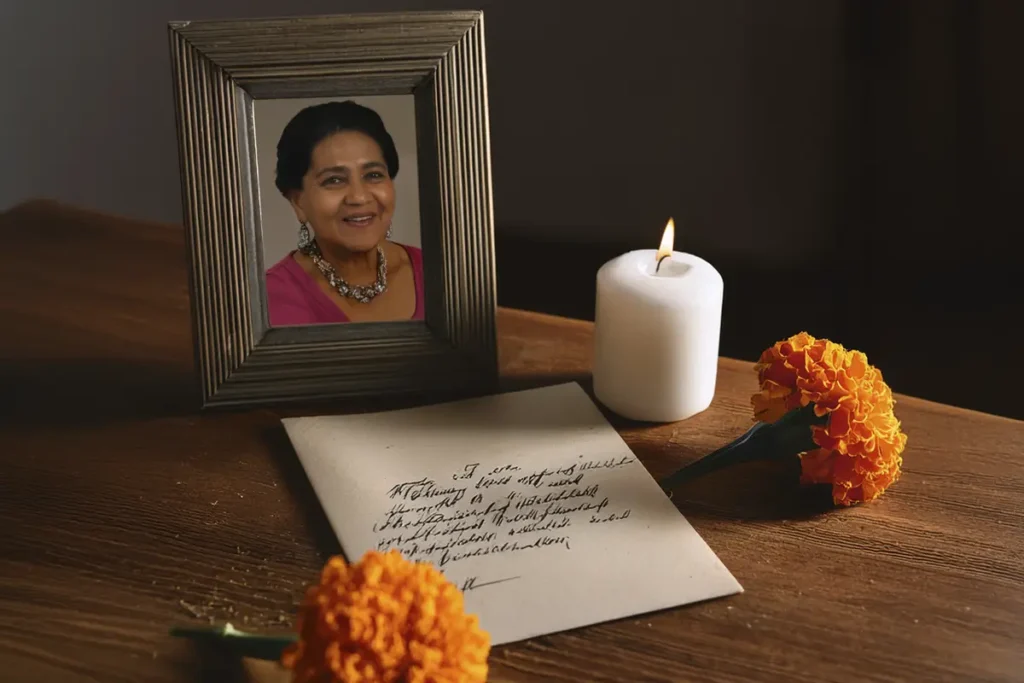
Behind every Day of the Dead altar lies something that isn’t always visible at first glance: a family story.
Flowers, candles, food, and photographs are part of a tradition that has been passed down from generation to generation. But they are also a way to revisit shared moments, cherish familiar traditions, and keep the memory of our loved ones alive.
Perhaps that is why no two offerings are exactly alike. Each one holds names, flavors, memories, and feelings that only make sense to those who prepare them.
The Day of the Dead invites us to view absence in a different light. Not because the sadness disappears, but because memories can also find a place among the flowers, music, food, and family gatherings.
And perhaps that is where one of the deepest meanings of this Mexican tradition lies: understanding that remembering those who are no longer with us can also be a way to celebrate the life we shared with them.
Keep Exploring the Day of the Dead
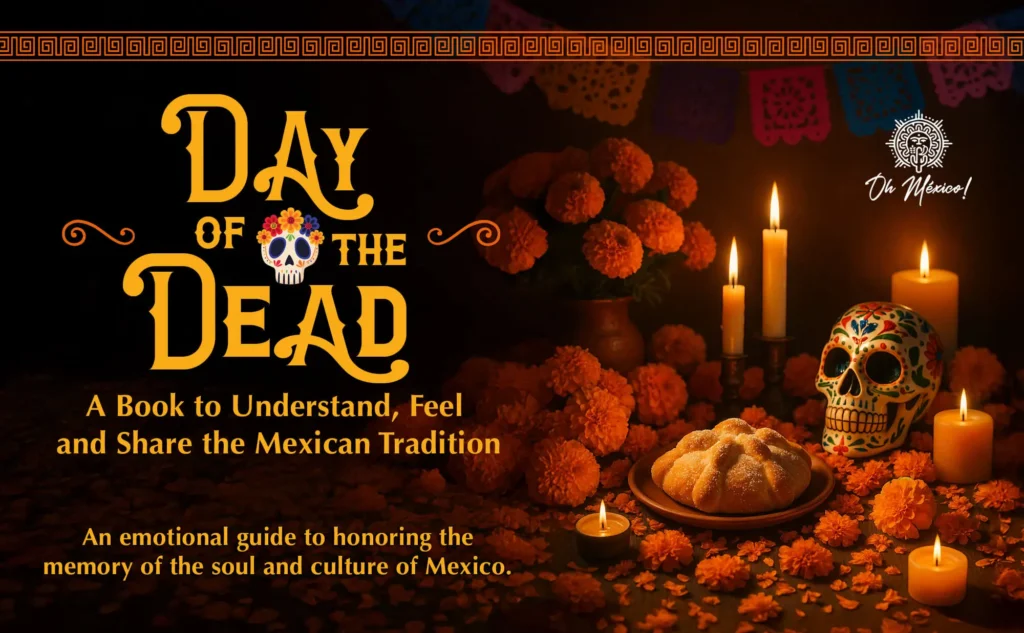
The Day of the Dead is more than a celebration. It is a tradition filled with stories, symbols, and memories.
If you’d like to explore its meaning and discover more about this expression of Mexican culture, take a look at our Day of the Dead book by Oh México!.
Frequently Asked Questions About the Day of the Dead Altar
What Are the Most Important Elements of a Day of the Dead Altar?
Among the most characteristic elements are cempasúchil flowers, candles, water, food, and personal mementos.
However, there is no universal list of required elements.
Can You Make a Small Day of the Dead Altar?
Yes. You can set up an offering on a table or shelf with a photograph, some flowers, a glass of water, and a meaningful object.
You don’t need to build multiple levels.
What is the difference between an altar and an offering?
The altar is the space or structure where items dedicated to the deceased are placed.
The offering consists of food, flowers, and objects that are offered symbolically.
In everyday usage, both terms are often used to refer to the entire set.
When is the Day of the Dead altar taken down?
Many families remove their offerings after November 2.
However, some communities keep them for longer, in accordance with their traditions.
There is no single date for doing this.