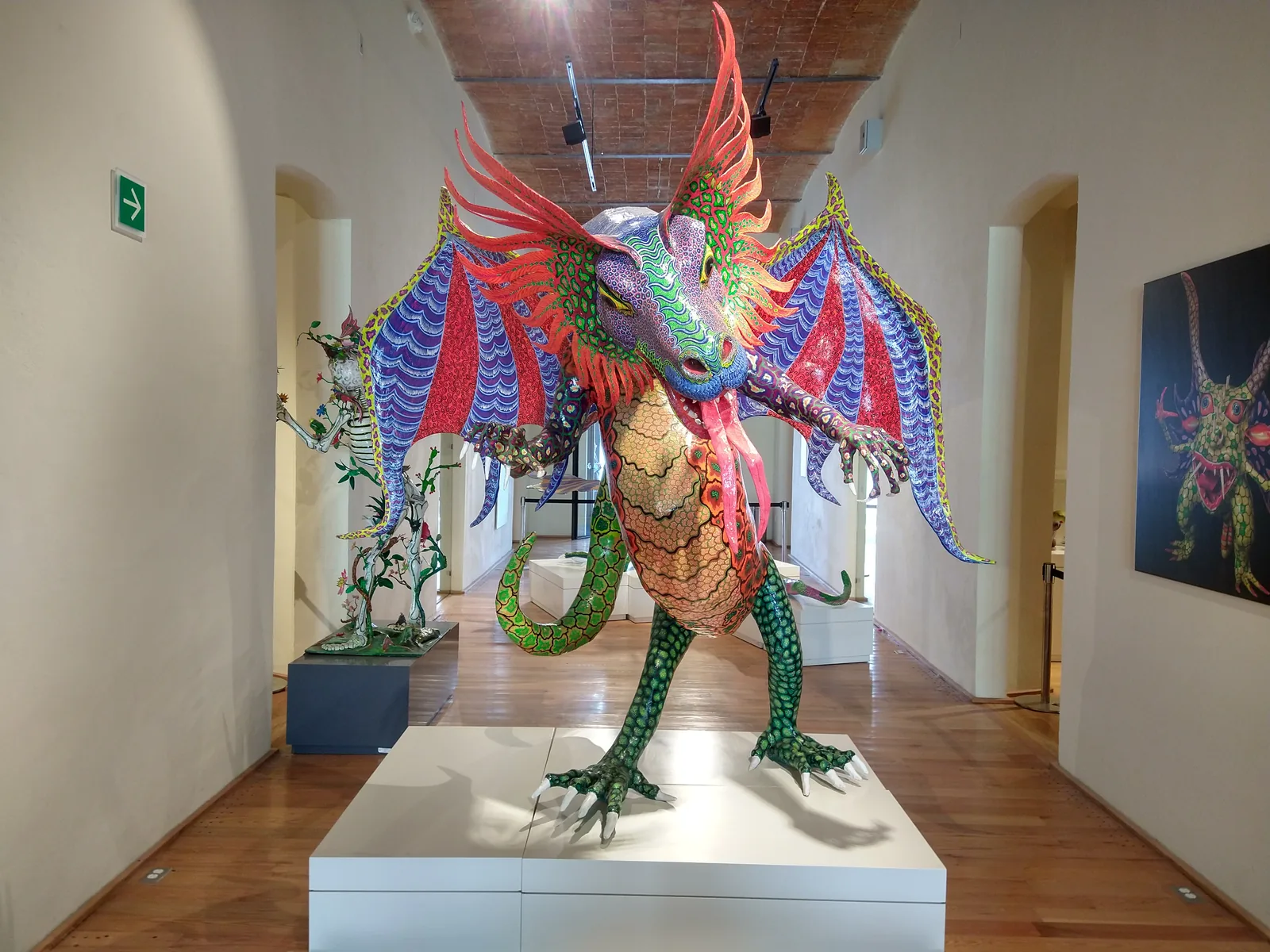
Wings where you’d expect to find legs. A feline face that extends into an impossible body. Colors that make it hard to look away. Alebrijes are figures from Mexican folk art that take the form of fantastical creatures, often combining features of different animals.
Their history is linked to Pedro Linares, an artisan from Mexico City who created them using cartonería, a traditional Mexican papier-mâché technique. However, you’ll also find wooden pieces known as alebrijes, especially in Oaxaca. To understand where they come from, it’s worth taking a closer look at the materials, the craftsmanship, and the stories behind each figure.
Pedro Linares and the Dream That Took Shape in Paper
Pedro Linares was a cartonero, an artisan working with paper and paste, in the La Merced neighborhood of Mexico City. His craft involved transforming paper and paste into three-dimensional figures: building bodies, shaping faces, and ensuring that his creations could stand.
According to Linares himself, while he was ill, he had a dream in which strange creatures appeared, and he heard the name by which they would later be known: alebrijes. That account was recorded in an interview documented in Radio Educación’s catalog.
The dream explains how Linares recalled the origins of his creatures. His craft helps us understand how he brought them to life: imagining an animal was just the beginning; he had to figure out how to build its body, add its limbs, and paint it.
Linares turned those creatures into papier-mâché figures. The tradition continued within his family, which kept the craft of making alebrijes alive and passed on their knowledge to new generations.
What Are Alebrijes Made Of?
In the Linares family tradition, paper is shaped using paste to create figures that are then painted. Some pieces have a wire frame that supports their shape.
The National Museum of Popular Cultures houses an example created by Felipe Linares Mendoza: a fantastical creature with a feline face and wings. Its catalog entry lists paper, paste, wire, and paint among the materials used.
Knowing this invites us to take a closer look. That body, which appears solid, is made of paper; the wings need a structure to keep them spread out. Each part requires figuring out how to give it volume and integrate it into the whole.
Next comes the painting. The lines can follow a curve, depict scales, or highlight facial features. Form and decoration work together: a single figure can take on different expressions depending on how its eyes, mouth, or body are painted.
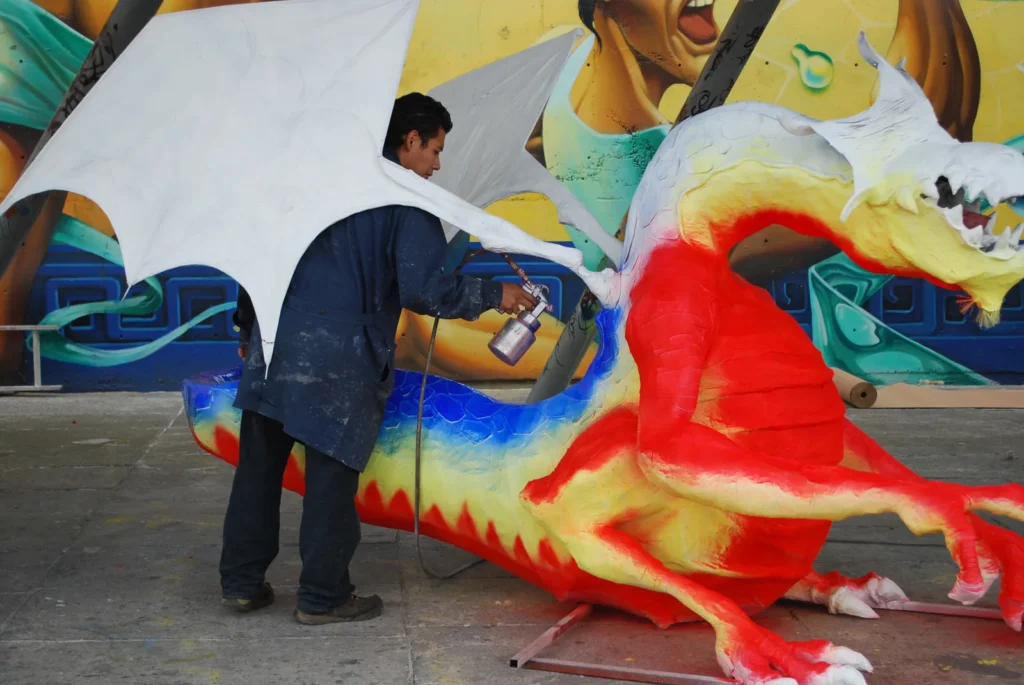
In a finished piece, many of these solutions go unnoticed. Observing them allows us to appreciate the skill required to work with such simple materials.
What About the Wooden Alebrijes from Oaxaca?
In Oaxaca, the name “alebrije” is also used for figures carved from wood and painted. Towns such as San Antonio Arrazola and San Martín Tilcajete are renowned for this type of artisanal production.
Here, the work requires familiarity with a different material. The wood is carved to shape the figure, left to dry, and inspected before continuing. Any cracks that may appear are repaired; then, the surface is sanded and prepared for painting.
Copal is one of the types of wood used, though not the only one. Nor do all the pieces depict animals that combine several species. Artwork from the Central Valleys includes recognizable animals, fantastical creatures, people, and scenes from everyday life.
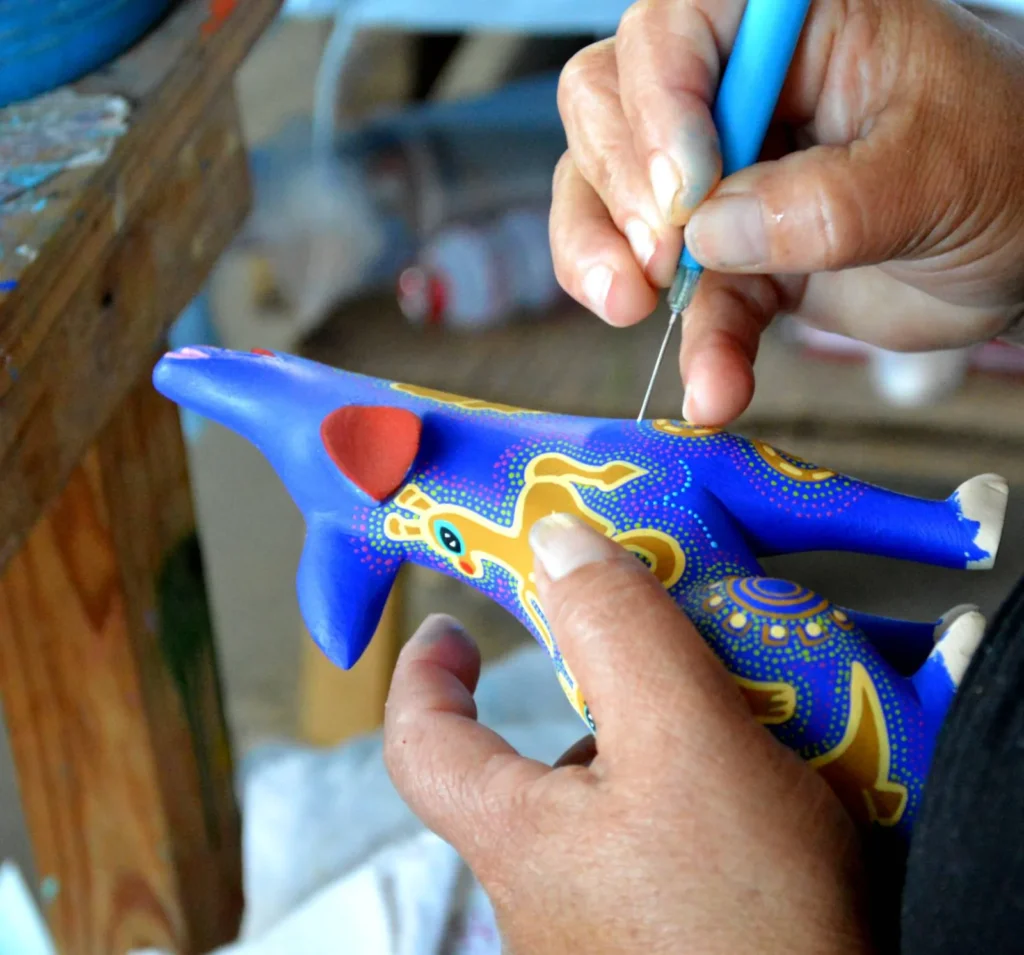
Decoration also requires precision. Dots, lines, and other motifs are arranged across curved surfaces, around legs, faces, and bodies. When you get closer, you can see details that are lost when you look at the piece as a whole.
Recognizing the Mexico City origins of papier-mâché alebrijes helps us distinguish their history from the traditions developed in Oaxacan workshops. The materials, skills, and cultural references of those workshops are worth exploring in their own right.
What Do Alebrijes Mean?
There is no single meaning that explains all alebrijes. To understand a piece, it’s important to know who made it and what they wanted to express.
At the Jacobo and María Ángeles Workshop in San Martín Tilcajete, the artisans refer to their carvings as tonas and nahuales and explain their connection to the Zapotec calendar and worldview. This cultural dimension is part of a specific way of understanding and practicing the craft.
It is important to consider these explanations in their context. We cannot automatically attribute the role of spiritual protector to every colorful figure, nor can we assign a universal meaning to all of their colors.
Asking about a piece allows us to understand what its creator sees in it: references to their community, knowledge passed down through their family, or ideas they wanted to explore. Their explanation may reveal something that the piece’s appearance alone does not tell us.
A Different Way of Looking
The next time you come across an alebrije, take a few extra moments to look at it. Follow a painted line until it changes direction, notice how a wing attaches to the body, or look for the small details around the eyes.
If you can talk to the person who created it, ask them which part was the most challenging to figure out. That question can help you identify decisions and difficulties that aren’t immediately apparent in a finished piece.
Perhaps it was the impossible creature that first caught your eye. A closer look gives you reasons to admire the person who made it, too.
Continue Discovering Mexican Folk Art
Discover the Museo de Arte Popular (Folk Art Museum) in Mexico City and explore its connection to alebrijes and other forms of Mexican craftsmanship.
You can also explore The Colors of Mexico: The Meanings Behind Mexico’s Most Iconic Colors.
Photo credits
Alebrije at the Cholula Regional Museum. Photo: Luisalvaz / Wikimedia Commons. CC BY-SA 4.0 license. Image resized and converted to WebP, uncropped. Original photo.
Painting an alebrije at FARO de Oriente, Iztapalapa. Photo: Thelmadatter / Wikimedia Commons. CC BY-SA 3.0 license. Image resized and converted to WebP, uncropped. Original photo.
Decoration of a wooden figure in Arrazola, Oaxaca. Photo: AlejandroLinaresGarcia / Wikimedia Commons. CC BY-SA 4.0 license. Image resized and converted to WebP, uncropped. Original photo.